Category Archives: Uncategorized

Pain cream on your hands can kill your cat!

Veterinarians have long warned that pain medications like ibuprofen are toxic to pets. And it now looks like merely using a pain relief cream can put cats at risk.

That’s what happened in two households, according to a report issued Friday by the Food and Drug Administration. Two cats in one household developed kidney failure and recovered with attention from a veterinarian. But in a second household, three cats died.

When the veterinarians performed necropsies on the three dead cats, they found physical damage in the cats’ intestines and kidneys, evidence of the toxic effects of nonsteroidal anti-inflammatory drugs, or NSAIDs. NSAIDs include ibuprofen, like Advil and Motrin, and naproxen, which is in Aleve.

Ibuprofen is the most common drug that pets eat, according to the American Veterinary Medical Association, perhaps since many of the pills are candy-coated. In pets, the drugs can cause stomach or intestinal ulcers and kidney failure.

But these cats died by flurbiprofen, another NSAID. In the case of its most recent victims, the cat owner applied a lotion or cream containing flurbiprofen to treat muscle or arthritis pain. And it’s highly unusual for a cat to show up at the vet’s office; usually it’s the dogs that get into trouble from exposure to NSAIDs.

Vitamin D Increases Cancer Survival Length

100px-Pink_ribbon_svgA new study reported a the 2015 American Society of Cancer Oncology Gastrointestinal Cancers Symposium shows that metastatic colorectal cancer patients who had high levels of vitamin D in their bloodstream prior to chemo survived longer on an average than those who did not.  On the average the groups with the highest levels of vitamin D survived 33% longer and also were associated with longer time to disease progression. Previous studies already showed that vitamin D may play a role in cancer inhibition.

-Whole Foods magazine March 2015 “News Links”

Chemotherapy reported to do more harm than good ….

As a chemist trained to interpret data, it is incomprehensible to me that physicians can ignore the clear evidence that chemotherapy does much, much more harm than good.”
– Alan Nixon, Ph.D., Past President of The American Chemical Society

Overall survival of patients with primary breast cancer has not improved in the past 10 years, despite increasing use of multiple-drug chemotherapy for treatment of metastasis. Furthermore, there has been no improvement in survival from first metastasis, and survival may even have been shortened in some patients given chemotherapy…. Actuarial survival analysis … reveals no prolongation in overall survival, despite the increased use of multiple-drug chemotherapy for metastatic disease. The survival of the 78 patients who received chemotherapy from first detection of metastases (including single-agent chemotherapy) was no better than that of the 80 who did not receive chemotherapy. There was also no improvement in survival for those who received multiple-drug chemotherapy (66 patients)…. The fact that regressions of breast cancer had no influence on overall survival must reflect the inadequacy of present-day chemotherapy.”

Read More:

    http://www.endalldisease.com/study-chemotherapy-treated-cancer-patients-die-sooner-than-the-untreated/

Free PDF book: Electrolytes: Not Just for Sports!

This has a great big chart in it about all the electrolytes you may be deficient in and what illness that will cause. It also gives info on what they are putting in sports drinks that may not be good for you and why just plain water isn’t the answer to brain fog and a tired body.

PDF DOWNLOAD: Electrolytesrevised

Alkalized waters – yes or no?

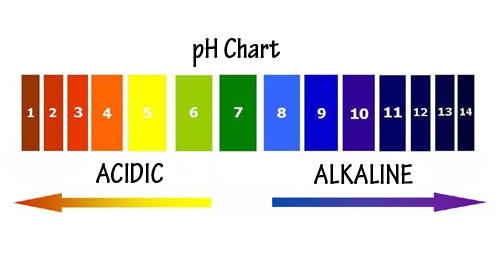
pH-ChartJust as the body regulates its temperature in a rigid manner, so will it manage to preserve a very narrow pH range – especially in the blood – a pH of 7.365. Chronic acidity will interrupt all cellular activities and functions — it interferes with life itself.


 Things that create acidity in the body are sweets, alcohol, flour products, diary, processed meat and some veggies like peas, beans, lentils and peanuts. Alkaline foods include whey, goat’s milk, plain yogurt, cold-pressed oils, miso, brewer’s yeast, eggs and unprocessed sea salt. Most herbs are alkaline as well. Alkaline beverages include fruit and vegetable juices, coffee, tea, mineral water and red and white wines. Almonds, coconut and chestnuts are alkaline nuts. Veggies include broccoli, cauliflower, eggplant, asparagus, celery, onions, peppers and radishes. Spinach, kale and fennel.


In trying to promote alkalinity, the bottled water industry is putting out a plethora of alkaline waters. These may give the body a temporary boost as they are high in the alkaline-forming minerals like sodium and potassium, but please take notice of where the water comes from, how it has been filtered (if any), and what type of bottle it is in. PET BPA-free bottles are the best, but plastics still tend to leech toxins when in juxtaposition with minerals so a highly mineralized water may become contaminated just by being containerized.


There are also many alkalizing additives for water, but most of them, like bottled waters and sports drinks only contain at most, five minerals. Although this may alkalize the blood, it does little to replace the myriad of electrolytes lost through exercise, stress and daily living. People will be lulled into security thinking their sports water or alkaline water will give them sufficient replacements. That is not true. You need a multi-electrolyte trace-mineral supplement to put into your water to restore needed support for the neurotransmitters in the brain which ultimately control all bodily functions. The most convenient and economical of these is a concentrate that sprays into any liquid. It has the full complement of trace-minerals so will facilitate raising the pH as well as providing all the necessary electrolytes. Check it out: www.electroBlast.com

Don’t let your pet eat the misteltoe

catsatdinnerHave a happy holiday season from the anti-aging lady and her pets.

Tips to keep your pet safe especially during the Holidays:

1. Don’t let them eat mistletoe or holly…poinsettias aren’t lethal but can cause vomiting and diarrhea.

2. Don’t let them drink the water under the tree especially if you’ve added longevity chemicals.

3. Keep tinsel and ornament away and make sure they can’t chew light wires. Also they my chomp down ribbons and paper so watch them.

4. Don’t let them eat pine needles.

5. Keep away: chocolate, gravy, spicy foods, cooked bones, alcohol.

6. Snow globes are filled with antifreeze which could kill them so if one breaks clean it up and keep the pet out of the room while cleaning.

7. Candles should be extinguished while you are not in the room as the pet may knock it over and burn your house down. Also potpourri can make them sick as can those oil fragrance sticks (the oil can be lethal).

8. Keep your pets away from party guests if them seem to be getting stressed due to all the commotion.

*reprinted from Trupanion.com

Workshop to restore your sanity after the holidays.

Audrey Herrick, Reiki Master and I are offering a 1-day workshop in the Berkshires of MA on Jan 10. If anyone is close by and wants to come please contact us at 888-217-7233. More info: click here

workshop flyer

Quercetin helps allergies and belly fat!

orangeMy vet clued me into Quercetin years ago as she was taking it for her allergies and suggested I give it to my cat for his season problems. It worked! Quercetin is the backbone structure for flavonoids, “nature’s biologic response modifiers”. It is the most active of the flavonoids and in clinical trials has demonstrated significant anti-inflammatory and antiallergic activity by inhibiting the manufacture and the release of histamine and other allergic/inflammatory mediators.

However, there is a more bioavailable form of this flavonoid: enzymatically modified isoquercitrin (EMIQ). EMIQ greatly increases quercetin levels in the blood compared to the ingestion of quercetin or rutin (another flavonoid). Most clinical studies have used a dosage of 200mg daily of EMIQ which would equal 8000 mg of quercetin. So if you don’t like to take a lot of pills, EMIQ is for you.

EMIQ also is great for belly fat reduction. It promotes enzymes that encourage the breakdown of fat within fat cells. Studies have shown subcutaneous fat and waist circumference to be reduced significantly (20%).  Quercetin is better absorbed if you take bromelain with it, but EMIQ doesn’t need any “co-factors”. Neither have shown any side-effects even when large quantities have been consumed for up to two years. EMIQ is recognized as safe (GRAS). Both forms may enhance uptake of certain drugs from the intestines so if you take it you may be able to reduce the dosages. Check with your ND about this.

source: Quercetin by Michael T. Murray, ND, Vitamin Retailer, Nov. 2014

To buy: Click Here

PS. Don’t forget to get a FREE e-copy of my new book “Think and Feel Younger” Click Here

Mineral deficiency linked to Ebola bleeding.

Selenium Deficiency Could Potentially Play an Important Role in Ebola Lethality according to Dr. Mercola.

Here’s yet another factor that could play an important role in the Ebola outbreak: selenium deficiency. The documented relationship between low selenium status and impaired immunity in relation to Ebola goes back to 1995. Intriguing evidence suggests that the lethal hemorrhaging associated with the Ebola virus may be influenced by a lack of selenium…

According to Dr. Gary Gordan, adults need at least 400 micrograms (mcg) of selenium per day, but if the virus is making seleno-proteins—which Ebola is thought to do—you may need several times that amount. The documentation I’m referring to was published in the Journal of Orthomolecular Medicine in 1995,15 and reads in part:

The expression of this hypothetical protein could impose an unprecedented selenium demand upon the host, potentially leading to severe lipid peroxidation and cell membrane destruction. This could also contribute to the characteristic hemorrhaging caused by intravascular blood clotting, due to the thrombotic effect of selenium (Se) deficiency. The possibility that this gene might contribute to the extreme pathogenicity of the Zaire strain of Ebola virus by this mechanism is also consistent with the observation that this potential selenoprotein gene is not present in the Ebola Reston strain, which was not pathogenic in humans…

It is very well documented that selenium plays a significant role in the regulation of blood clotting via its effects on the thromboxane/prostacyclin ratio. Selenium has an anti-clotting effect, whereas selenium deficiency has a pro-clotting or thrombotic effect. Selenium deficiency has been associated with thrombosis and even hemorrhaging, which has been documented in a number of animals with severe selenium deficiency… but is almost never seen in humans, probably because such an extreme selenium deficiency is rarely attained due to the diversity of human diets.

Thus, the possibility that a rapid depletion of selenium due to the formation of viral selenoproteins could be a factor contributing to the severity of the hemorrhagic symptoms is mechanistically very feasible. Our analysis suggests that severe Ebola infections could produce an artificial and extreme Se depletion, resulting in extensive cellular damage due to lipid peroxidation, combined with enhanced thrombosis.

This could also contribute to the associated immune deficiency that has been observed in Ebola infections.

To our knowledge, indicators of Se status and lipid peroxidation have never been examined in Ebola patients. However, selenium has apparently been used with great success by the Chinese in the palliative treatment of an infectious hemorrhagic fever. Although this did not involve Ebola virus, there are a number of different hemorrhagic fever viruses, and they may share common mechanisms. This example provides yet another reason to expect that pharmacological doses of selenium may also have some benefit in Ebola infections.” [Emphasis mine] http://www.mercola.com/

Editor: This is why we stress the importance of taking a full spectrum mineral supplement that includes selenium. http://bit.ly/10hOBzi

‘Dirty’ Kids Lower Allergy Risk

According to a study at Johns Hopkins Children’s Center and other institutions, the findings revealed that early exposure to bacteria and certain allergens may have a protective effect by shaping children’s immune responses – a finding that researchers say may help inform preventive strategies for allergies and wheezing, both precursors to asthma. 
 
According to Robert Wood, MD., chief of the Division of Allergy and Immunology, there are many immune responses that are shaped in the first year of life and that certain bacteria and allergens play an important role in stimulating and training the immune system to behave a certain way. In the study, infants that grew up in homes with mouse and cat dander and cockroach droppings in the first year of life had lower rates of wheezing at age three compared to children raised in “clean” homes not exposed to these allergens. In addition, infants in homes with a greater variety of bacteria were less likely to develop environmental allergies and wheezing by age three. Some 41 percent of allergy-free and wheeze-free children had grown up in such allergen and bacteria-rich homes. By contrast, only 8 percent of children with wheezing and allergies had been exposed to these substances in their first year of life.
Source: Jnl of allergy and Clinical Immunology – June 2014